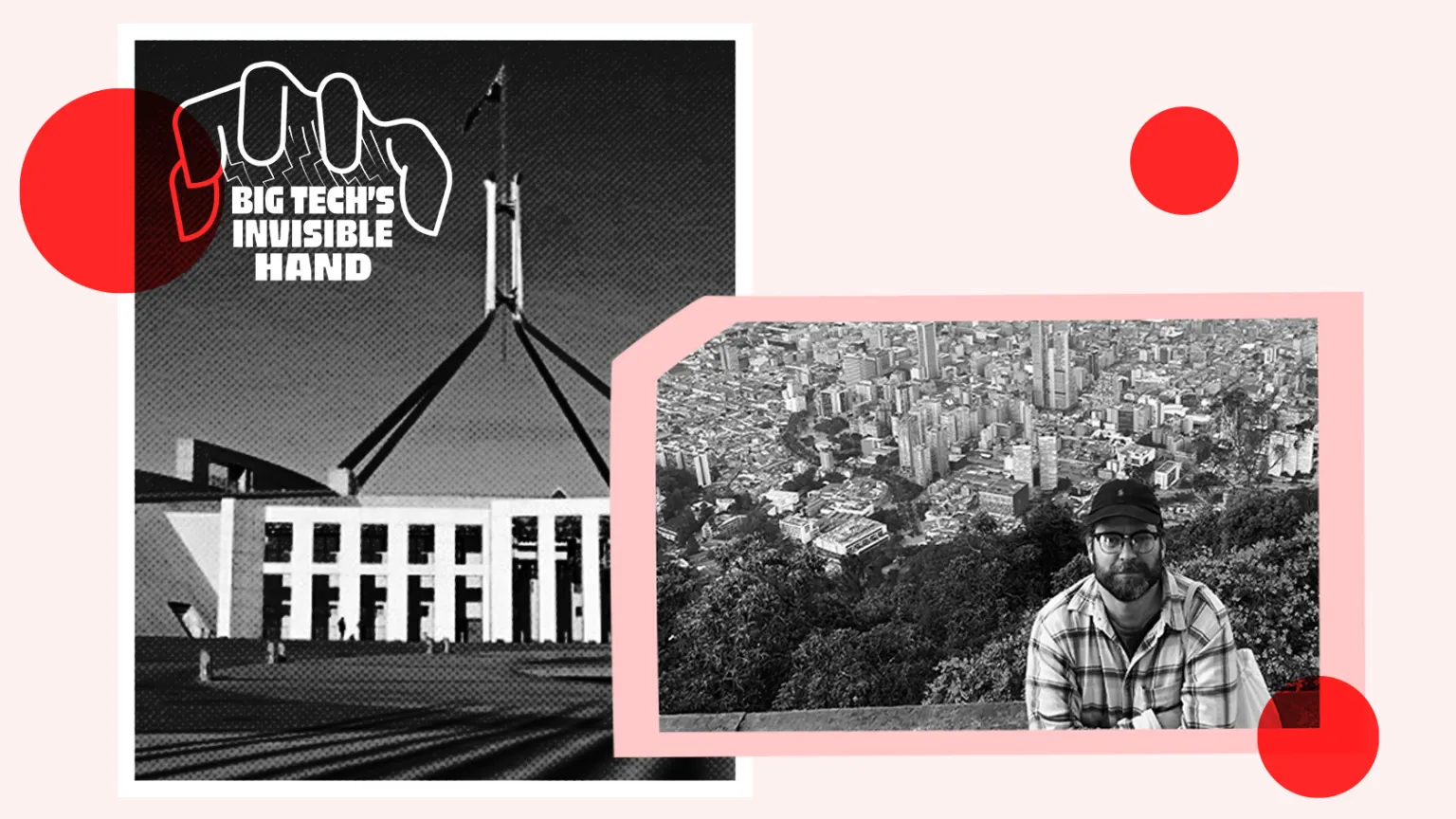

On a cold March morning, in a hotel conference room in Bogotá, Colombia, some three dozen journalists from 15 different countries crowded around a wall plastered with post-it notes. The words written on the brightly coloured notes sketched out the rough outline of a new transnational investigation called Big Tech’s Invisible Hand, one that we’d agreed not to disclose the details of — until now.
The reporters in the room had come from such far-flung places as South Africa, Indonesia, Canada, and Greece, as well as from all corners of Latin America, to form an international reporters’ alliance in an effort to map the vast worldwide influence of big tech lobbyists.
As Crikey’s politics reporter, I was there to represent Australia, having been contacted months earlier by Brazilian investigative journalism organisation Agência Pública. Reaching out to an outlet in Australia had been a natural step for the Brazilian journalists — after all, Australia’s 2021 news media bargaining code, and other recent legislative efforts aimed at reining in the power of the US tech giants, had sparked interest around the world. Crikey’s focus on the intersection of politics and tech — (think Bernard Keane’s articles on metadata retention or Cam Wilson’s ongoing scrutiny of the teen social media ban for starters) — made us a natural fit for the project.
Crikey signed on in October of last year, in the shadow of the US election race. My beat, and Crikey’s remit, means I’m regularly reporting on the efforts of lobbyists to influence decision-makers, dealings that often take place behind closed doors. The influence of lobbyists on media and tech policy is no secret, but this project appealed for its scale and ambition — it offered the opportunity for reporters from across the world to compare notes on the tactics and talking points of big tech.

Shortly after Crikey began attending planning meetings related to the investigation, Donald Trump was reelected as president of the US. The world watched on as tech leaders like Meta’s CEO Mark Zuckerberg, Apple’s CEO Tim Cook, Google’s CEO Sundar Pichai, Amazon’s founder Jeff Bezos, and Tesla’s CEO Elon Musk took front-row seats at Trump’s inauguration. Suddenly, the intersection of tech and politics became the story of the moment.
Just a few weeks earlier, the Labor government had revealed its plan to update the Morrison government’s news media bargaining code with a new, revived regime dubbed the news bargaining incentive. The incentive would effectively close a loophole by ensuring that platforms that choose not to enter or renew commercial agreements with news publishers will pay a charge.
As Elon Musk took a cabinet position and his DOGE project gained access to the very heart of the US government, President Trump began to assert his influence overseas, primarily through the threat of an ever-growing list of tariffs, including those directly protecting the interests of US tech companies. As the Australian government appeared to lose momentum on the incentive, possibly due to tariff-related bullying by Trump, our reporting gained pace. After the meet-up in Bogotá, the collaboration took place via online meetings, held across 14 time zones — inevitably at midnight Australian time.
Today we launch a new investigative series, titled Big Tech’s Invisible Hand, led by Agência Pública in collaboration with the Colombia-based Centro Latinoamericano de Investigación Periodística (CLIP), with 15 other participating news organisations (including us). The series sheds light on how technology companies have attempted to shape legislation across the world, litigated against governments in the courts, pushed back against regulation, and influenced public debate.
For the first time, this collaborative and cross-border investigation has identified almost 3,000 lobbying actions carried out before congresses and governments in various countries.
Next week, Crikey and our investigative partners will publish the stories we’ve co-written, focusing on the efforts by governments around the world to introduce mandatory bargaining codes that have, in many cases, been directly inspired by Australia’s law. The stories will chronicle how the lobbying efforts against those laws have been replicated across the world, in some cases successfully stopping the laws from passing.
While companies like Meta, Alphabet, Amazon, Microsoft, Apple, TikTok, and others deploy a range of strategies to shield their interests from regulation and public scrutiny, the consequences fall on citizens, governments, and democracies worldwide. With the Trump White House backing them, and AI set to rewrite all areas of public life, scrutinising the tech industry — accountable only to shareholders — is more crucial than ever.
For now, enjoy the first story, which focuses on the lobbying tactics used by tech companies in Latin America. Also, be sure to check out the interactive database, which allows you to search through thousands of lobbying actions, and hundreds of legal proceedings and pieces of draft legislation.

Big Tech’s Invisible Hand is a cross-border, collaborative journalistic investigation led by Brazilian news organization Agência Pública and the Centro Latinoamericano de Investigación Periodística (CLIP), together with Crikey (Australia), Cuestión Pública (Colombia), Daily Maverick (South Africa), El Diario AR (Argentina), El Surti (Paraguay), Factum (El Salvador), ICL (Brazil), Investigative Journalism Foundation – IJF (Canada), LaBot (Chile), LightHouse Reports (International), N+Focus (Mexico), Núcleo (Brazil), Primicias (Ecuador), Tech Policy Press (USA), and Tempo (Indonesia). Reporters Without Borders and the legal team El Veinte supported the project, and La Fábrica Memética designed the visual identity.




 PayPal