Buscar
Reportagem

Beleaguered Amazon tribes remain staunch in defence of their land

As criminals eye the natural riches of their heavily forested territories, the Ka’apor people refuse to be cowed – even if it means taking the law into their own hands

Reportagem
28 de maio de 2018
15:47
Este artigo tem mais de 8 anos
Não deixe a Publica sumir
Nos adicione como fonte preferencial no Google.
Idioma English

It was a letter of unity and solidarity. “Our forest, our rivers, our land are sacred to us,” wrote the Ka’apor tribe, from Maranhão in north-eastern Brazil, to the Munduruku, who live hundreds of miles away on the Tapajós river deep in the Amazon rainforest.

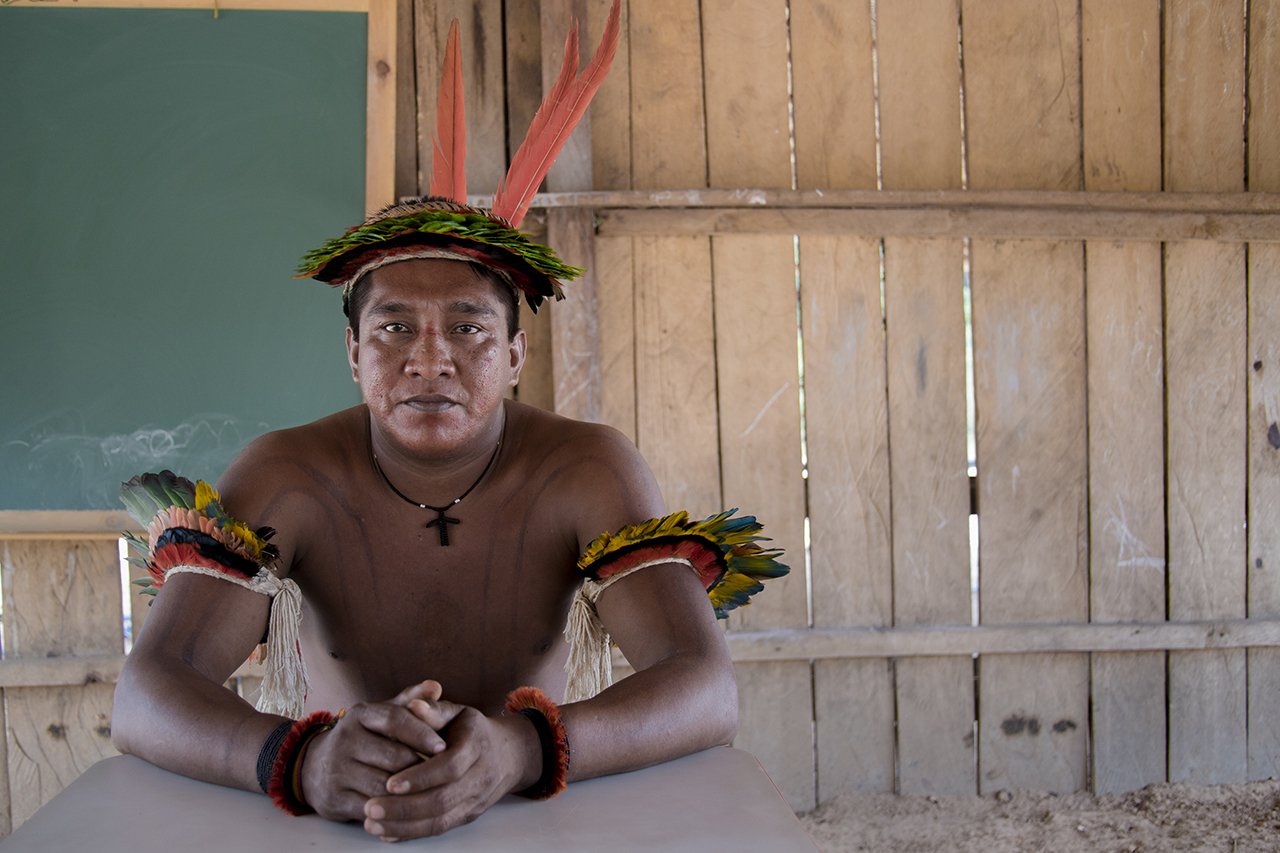
Ka’apor forest guardians patrol the borders of their resource-rich territory in Brazil’s Maranhão state

Both tribes are under threat from organised criminals who illegally grab land, log trees or prospect for gold. Now, tired of waiting for official protection that often fails to arrive, they are taking law enforcement into their own hands.

In three years, the Ka’apor have seized and torched 105 trucks carrying stolen timber, and closed down 14 illegal roads running through their lands, the tribe says. The Munduruku have delineated their own land in an effort to face down the lawless miners and land grabbers.

Their foes often have ties to politicians and police, which – combined with the absence of federal oversight – has compelled the tribes to strengthen and organise themselves in the face of an unequal struggle, one in which the state often seems an enemy or ally of the aggressors.

The Ka’apor live in the Alto Turiaçu indigenous territory. Since 1982, it has been granted a demarcated constitutional status that protects it for the tribe. But still the heavily forested area in the north of Maranhão has been invaded by illegal loggers, pillaging hardwood.

“A lot of this wood goes to Europe, to China, to other places,” says Gilderlan Silva, a representative of the Indian Missionary Council in Maranhão. “You have an economic power that goes right from the gas station owner, who finances the fuel of the logging truck, to the guy who owns the sawmill, right up to the financing of politicians.

“It is a market that drives a lot of money.”

In 2013, the Ka’apor created a management council based on the tribe’s historic principles. It was a break from their previous system of tribal chiefs, a tradition they say was imposed by Brazil’s National Indian Foundation (Funai).

The Ka’apor drafted an agreement to protect themselves, banning alcoholic drinks and drugs, which had arrived in the 17 villages in the hands of loggers.

Having recovered the illegal roads and deforested areas from invaders, the Ka’apor established seven villages as protected areas, to repel the intruders.

“We protected these areas because we did not want to see the end of our forest,” says Sarapó Ka’apor, one of the founders of the Ywyãhurenda village, a protected area that was previously an entry and exit point for logging trucks. “We got together with the council. We all gathered and took out the loggers. No one waited for Funai, we did it all ourselves.”

Such boldness has been the target of retaliation. Three members of the tribe have been murdered since 2010, in killings the tribe suspects were committed by their enemies. The crimes have not been solved. The tribe have also faced several invasions of their land, most recently in January, when 30 armed men threatened to burn down the houses in one village.

But last July, Michel Temer, the Brazilian president, obtained congressional approval to amend the constitution, legalising more than 2,000 irregular private properties on public lands in a move that was seen as sympathetic to the interests of land grabbers such as those in Maranhão.

The Ka’apor, meanwhile, say they have the legal right to decision-making powers over government policies that affect them. “According [to] the international conventions that Brazil has signed, indigenous communities should be the authors of the relevant public policy,” said Luís Antônio Pedrosa, a lawyer with the Society of Human Rights in Maranhão.

Members of the Ka’apor community are seen in a village established by the indigenous leaders

The Munduruku, likewise, studied strategies to strengthen the protection of their territory and keep the forest intact. For this, they meet other tribes, such as the Ka’apor, 10 times a year. In 2015, they demarcated their own territory in an attempt to keep out illegal miners and loggers. The tribe even has a problem with poachers stealing palmito, the vegetable of the palm tree.

Now, tribe members patrol the edge of their territory, looking for signs of invaders. “The people who are closest to the edge [of the territory] report back on if there has been an invasion,” said Juarez Saw Munduruku, chief of the Sawré Muybu village.

This report was produced by Agência Pública, a non-profit investigative journalism agency based in Brazil. This is a translation of the original version, published in Portuguese here.

Reportagem republicada no The Guardian.

Lunae Parracho for the Guardian
Lunae Parracho/Greenpeace

Não é todo mundo que chega até aqui não! Você faz parte do grupo mais fiel da Pública, que costuma vir com a gente até a última palavra do texto. Mas sabia que menos de 1% de nossos leitores apoiam nosso trabalho financeiramente? Estes são Aliados da Pública, que são muito bem recompensados pela ajuda que eles dão. São descontos em livros, streaming de graça, participação nas nossas newsletters e contato direto com a redação em troca de um apoio que custa menos de R$ 1 por dia.

Clica aqui pra saber mais!

Se você chegou até aqui é porque realmente valoriza nosso jornalismo. Conheça e apoie o Programa dos Aliados, onde se reúnem os leitores mais fiéis da Pública, fundamentais para a gente continuar existindo e fazendo o jornalismo valente que você conhece. Se preferir, envie um pix de qualquer valor para contato@apublica.org.

Vale a pena ouvir

EP 234 “STF em ponto de não retorno” – com Eloísa Machado de Almeida

Coordenadora do grupo de pesquisa Supremo em Pauta analisa a crise do STF e os desafios da recuperação de credibilidade

0:00

Leia de graça, retribua com uma doação

Na Pública, somos livres para investigar e denunciar o que outros não ousam, porque não somos bancados por anunciantes ou acionistas ricos.

É por isso que seu apoio é essencial. Com ele, podemos continuar enfrentando poderosos e defendendo os direitos humanos. Escolha como contribuir e seja parte dessa mudança.

Junte-se agora a essa luta!

Newsletter

Saiba de tudo que investigamos

Assinar
Fique por dentro

Receba conteúdos exclusivos da Pública de graça no seu email.

Assinar

Artigos mais recentes

Lucas Kallas, da Cedro Participações

Exclusivo: Decreto de Romeu Zema beneficiou mineradora de Lucas Kallas, ligado a Vorcaro

|

Então governador autorizou uso minerário em fevereiro para expansão da Cedro; empresa alega que rito foi legal

Com pai, marido e irmão presos, Natália Vorcaro Zettel segue à frente de 54 empresas

|

Irmã de Daniel Vorcaro é alvo de representação no MPF por suspeita de lavagem de dinheiro

Recordar é votar: 13 investigados pela CPI da Covid disputam eleições neste ano

|

Apontados pelos senadores por diversos crimes durante a pandemia concorrem a cargos – de deputado estadual a presidente

Pessoas negras são alvo da maioria dos gastos com prisões em 25 estados e DF, diz estudo

|

Para advogada do Justa dado demonstra seletividade penal e políticas estaduais com lógica punitivista

Brasília (DF), 07/05/2025 - Reunião da Comissão de Constituição e Justiça e de Cidadania (CCJ) da Câmara para votar requerimento que pede a suspensão de ação penal contra o deputado Ramagem.Foto: Lula Marques/Agência Brasil

Esposa de Ramagem usa verba de campanha para ex-assessora e irmã de Allan dos Santos

|

Candidata a deputada federal exilada nos EUA repassou R$80 mil a empresa de ex-assessora de Ramagem em agosto

Policiais candidatos fazem autopromoção no YouTube e podem lucrar com violência e machismo

|

Estudo estima monetização de 15 influenciadores; agente eleito não pode se apresentar como policial, diz governo de SP

Bolsonaristas capturam perfis nas redes para inflar apoio religioso a Mendonça

|

Contas no Instagram trocam de nome para enaltecer juiz e simular apoio popular — prática conhecida como ‘astroturfing’

Mãe que perdeu o filho para as bets pede proibição em encontro com Lula

|

Professora mineira foi ouvida pelo presidente após reportagem da Pública motivar projetos de lei e investigação no MPF

Câmeras Smart Sampa

Câmeras, IA e repressão unem candidatos dos estados com polícias mais letais do país

|

Esquerda, direita e extrema direita propõem mais tecnologia e inteligência na segurança, mas ignoram violência policial

Ministra Cármen Lúcia dá o tom do dia no STF: “não garantimos o rigor que deveríamos”

|

Sessão do Supremo para avaliar se Alexandre de Moraes seria investigado acaba com pedido de vista e troca de farpas